TM&HT Packaging
Menu
Request a Custom Quote

Custom Molded Pulp Packaging & Inserts

Custom molded pulp packaging, trays and protective fibre inserts developed around product geometry, fragile zones, cushioning, nesting, tooling and integration with the outer box.
Custom Molded Pulp Packaging & Inserts custom packaging
Temporary concept image

Product specification

See the format from every working angle.

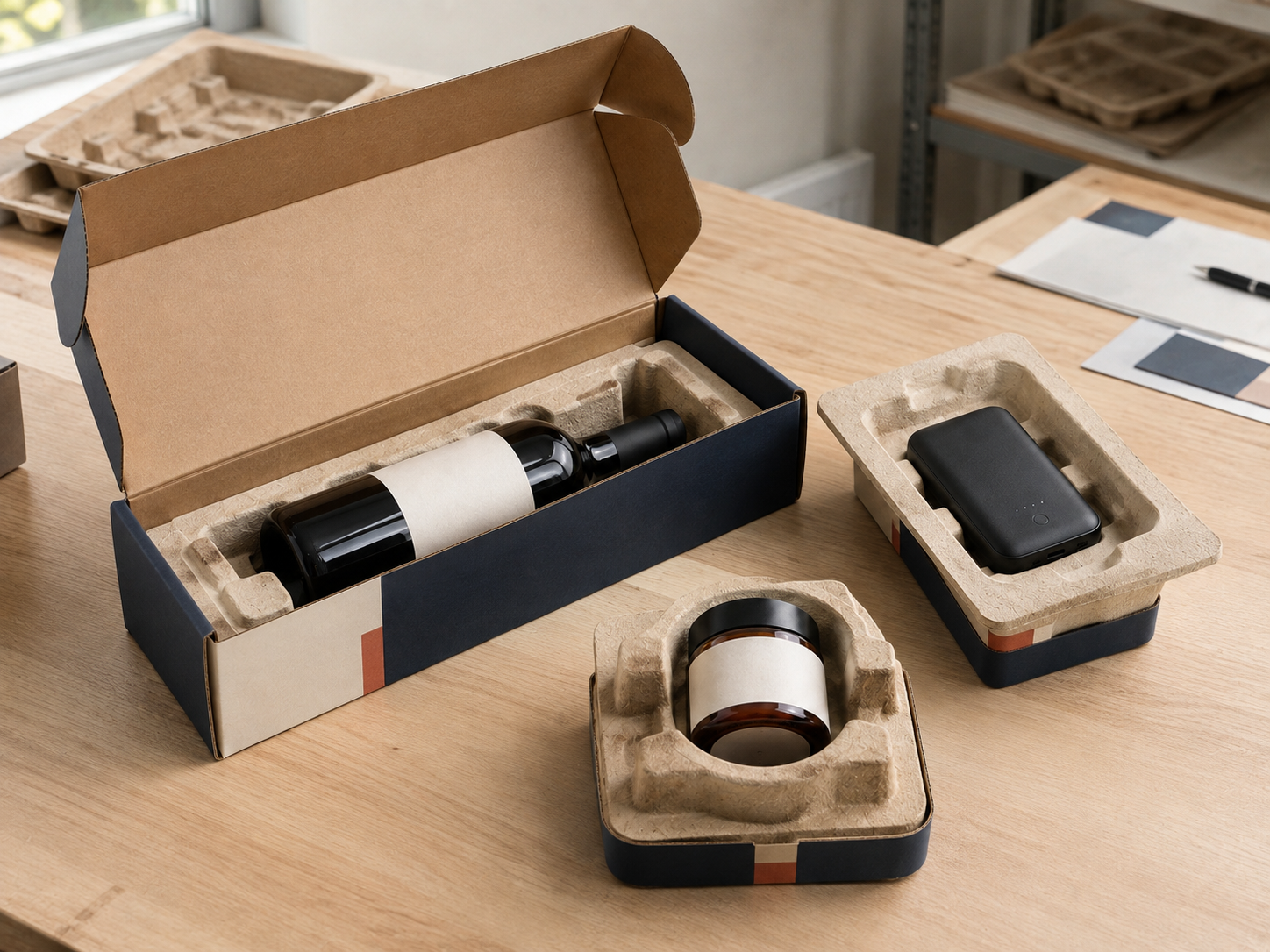
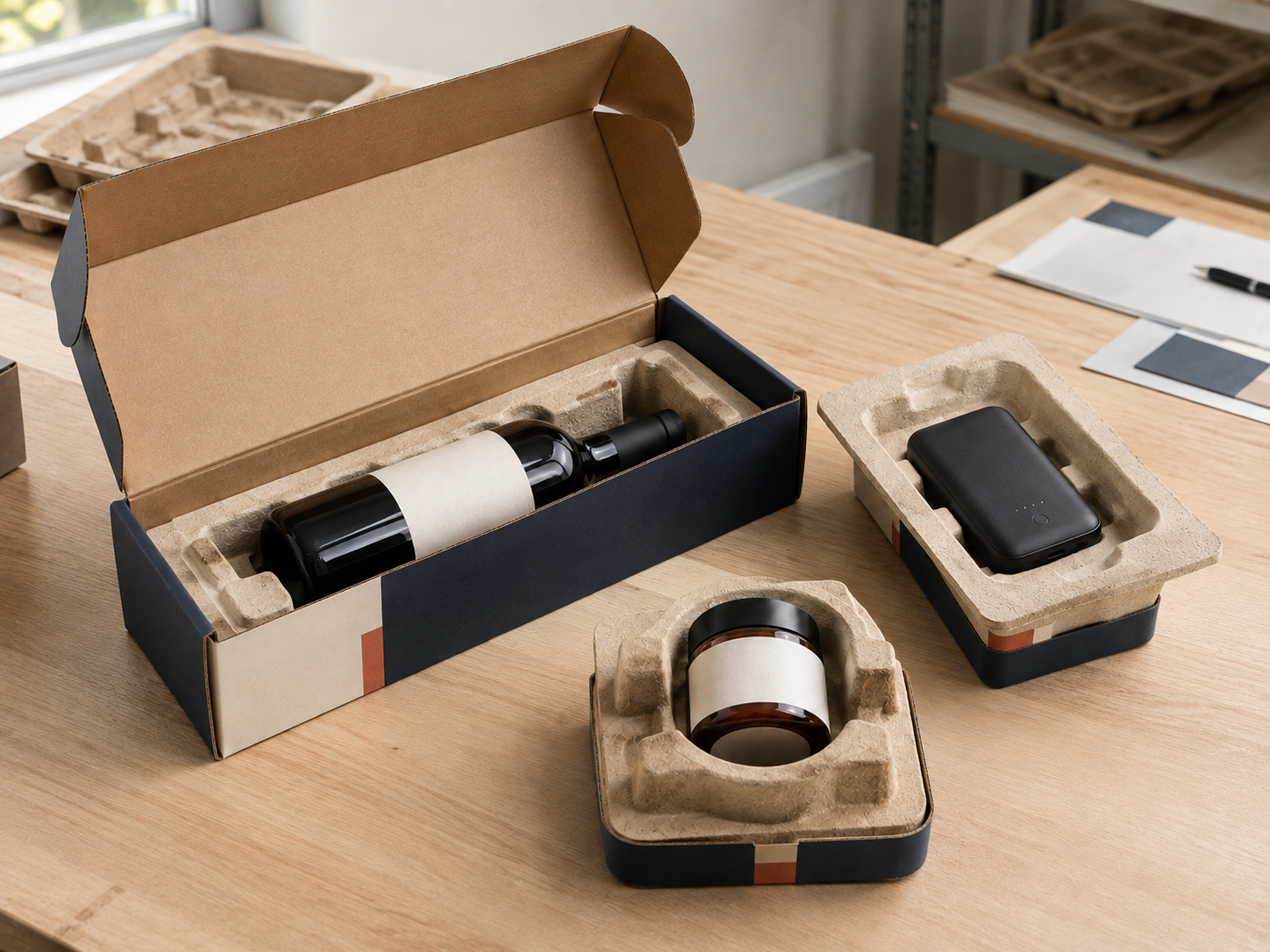
Molded pulp is designed from the protected product outward. Cavities, ribs, draft angles, wall transitions and nesting must be resolved alongside the outer box and the expected transit conditions.
Realistic molded pulp inserts protecting a bottle, electronics device and cosmetic jarTemporary concept image
01Overall formatTemporary concept image
Close detail of molded pulp cavity, protective ribs, nesting lip and natural fibre texture
02Construction detail

Buyer snapshot

Use these as planning inputs. The confirmed quote follows the approved structure, quantity and delivery destination.

Starting routes
Natural dry-press or refined wet-press
Design inputs
Product geometry, weight, fragile zones and outer box
Tooling gate
Fit and removal access approved before release
MOQ & schedule
Quoted after geometry, finish and tooling review

See the structure and finished form together.

A common starting size is shown immediately for custom molded pulp packaging & inserts. Adjust the working size, colour or logo and both views update together.

Working dimensionsPackaging colourYour logoThe preview will load automatically as this section enters view.
Reference sizing

Common starting sizes

Measurements follow overall L × W × D; product cavity specified separately. Use these examples to describe the scale you need; final clearance is checked against the physical product and approved sample.

  • Small retail insert15.9 × 14.8 × 7 cmReference molded-fibre gift-box footprint
  • Wine tray — flat14.5 × 9.5 × 2.5 in
  • Wine tray — folded14.5 × 4.75 × 5 inFor standard 750 mL bottles up to Ø3.25 × H13.5 in
  • Custom insertBuilt from product geometryRecommended for electronics, cosmetics and irregular products
Reference sizes are planning guides, not stocked-SKU or fit guarantees. Structural allowances and tolerances are confirmed during prototype review.

Typical applications

  • Bottle and glassware protection
  • Electronics and accessories
  • Cosmetics, wellness and presentation inserts

What we confirm before production

  • Product geometry and fragile zones
  • Drop, vibration and compression exposure
  • Cavity clearance, ribs and draft
  • Nesting, outer box and packing sequence
Material

Build the structure first.

  • Recycled-fibre molded pulp
  • Natural, light or custom-colour fibre options
  • Dry-press or refined-surface constructions
  • Paperboard outer packs and sleeves
Print

Control colour and artwork.

  • Molded or debossed identification marks
  • Printed paper sleeve or outer carton
  • Applied label where direct surface printing is unsuitable
Finish

Add emphasis where it helps.

  • Natural molded-fibre texture
  • Refined or smoother presentation surface
  • Protective coating only where the use case requires it
Start with this format

Carry the product context into your quote.

Select a starting size and material direction. Both stay editable in the project brief.

Request a Quote for This Product

Define the proof before production.

Final specifications depend on the product, intended use, dimensions, order quantity and destination.

Buyer specification guide

Custom molded pulp packaging, trays and protective fibre inserts developed around product geometry, fragile zones, cushioning, nesting, tooling and integration with the outer box.

01

Choose the forming route from the required surface and function

Molded fibre is not one uniform finish. The useful starting route depends on whether the part is primarily protective, presentation-facing or both. Actual fibre recipes, colours and forming routes are confirmed with the selected production partner before tooling.

Starting routeUseful forConfirm before quote
Natural dry-pressProtective trays, shipping inserts and hidden fitmentsSurface expectation, wall transitions, dust tolerance and nesting
Refined / wet-pressPresentation inserts with a smoother visible faceCosmetic standard, edge definition, colour and moisture exposure
Custom-colour fibreBrand-led inserts where fibre colour is part of the presentationColour tolerance, transfer risk, volume and supporting material documentation

The final route is quoted only after product geometry, appearance standard and expected order volume are reviewed.

02

Engineer the cavity from product data—not from the outer box alone

The design begins with the product geometry, weight, fragile zones and removal points. Clearance, ribs, draft angles, wall transitions and nesting are then developed together with the outer box and packing sequence.

  • Provide a physical product, accurate 3D data or a dimensioned drawing
  • Identify surfaces that may accept load and surfaces that must remain untouched
  • Confirm finger access, orientation, assembly and how the product is removed
03

Resolve samples, tooling and volume before production release

A structural sample can check fit and handling before production tooling is authorized. Tooling route, sampling method, minimum practical volume and timing vary with part depth, finish, size and production method, so they are quoted after geometry review rather than advertised as one fixed number.

  • Approve product fit and removal access
  • Confirm the outer-box relationship and pack-out sequence
  • Record the accepted surface standard, colour and dimensional tolerances
04

Verify the complete pack against the real distribution journey

An insert only works as part of a system. The loaded insert, outer carton and master-carton arrangement should be reviewed together for movement, compression, vibration and handling appropriate to the expected route.

Project questions

Clear answers before the brief.

What information is needed to design a molded-pulp insert?
We need the product geometry, fragile zones, weight, removal points, outer-box space and expected drop, vibration and compression exposure.
Can molded pulp replace plastic trays?
It can in many applications, but protection, surface finish, moisture exposure, tolerances and production volume must be reviewed for the actual product.
Can the insert be coloured or branded?
Colour options and molded marks may be possible. Printed branding is often handled by a sleeve or outer paper box for better detail and control.
Why are draft angles and nesting important?
Draft helps release parts from tooling, while nesting affects packing density, freight and separation on the packing line.
What is the difference between dry-press and wet-press molded pulp?
Dry-press parts usually prioritize protective performance and a natural fibre surface. Refined wet-press routes can provide a smoother presentation face and sharper detail. Product protection, appearance, moisture exposure, tooling and volume should be reviewed before selecting the route.
When is production tooling approved?
Tooling is released after the product geometry, cavity strategy, removal access, outer-box relationship and expected surface standard are reviewed. A structural sample or suitable prototype is used to resolve fit before production approval.

Make the next approvala physical one.

Share the product, quantity, timeline and destination. We’ll help define the right next step.

Request a Custom Packaging QuoteDiscuss Your Project on WhatsApp