
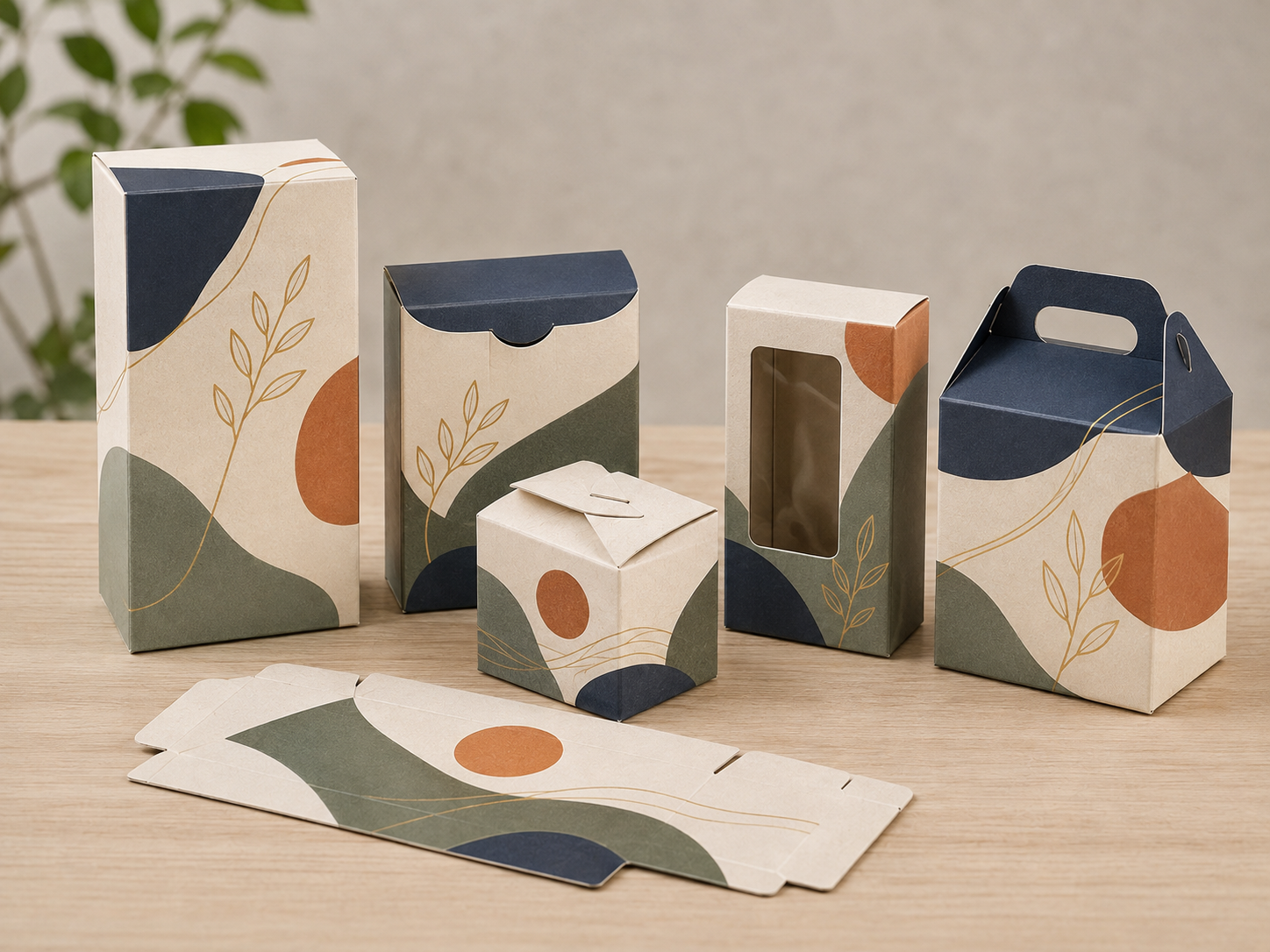
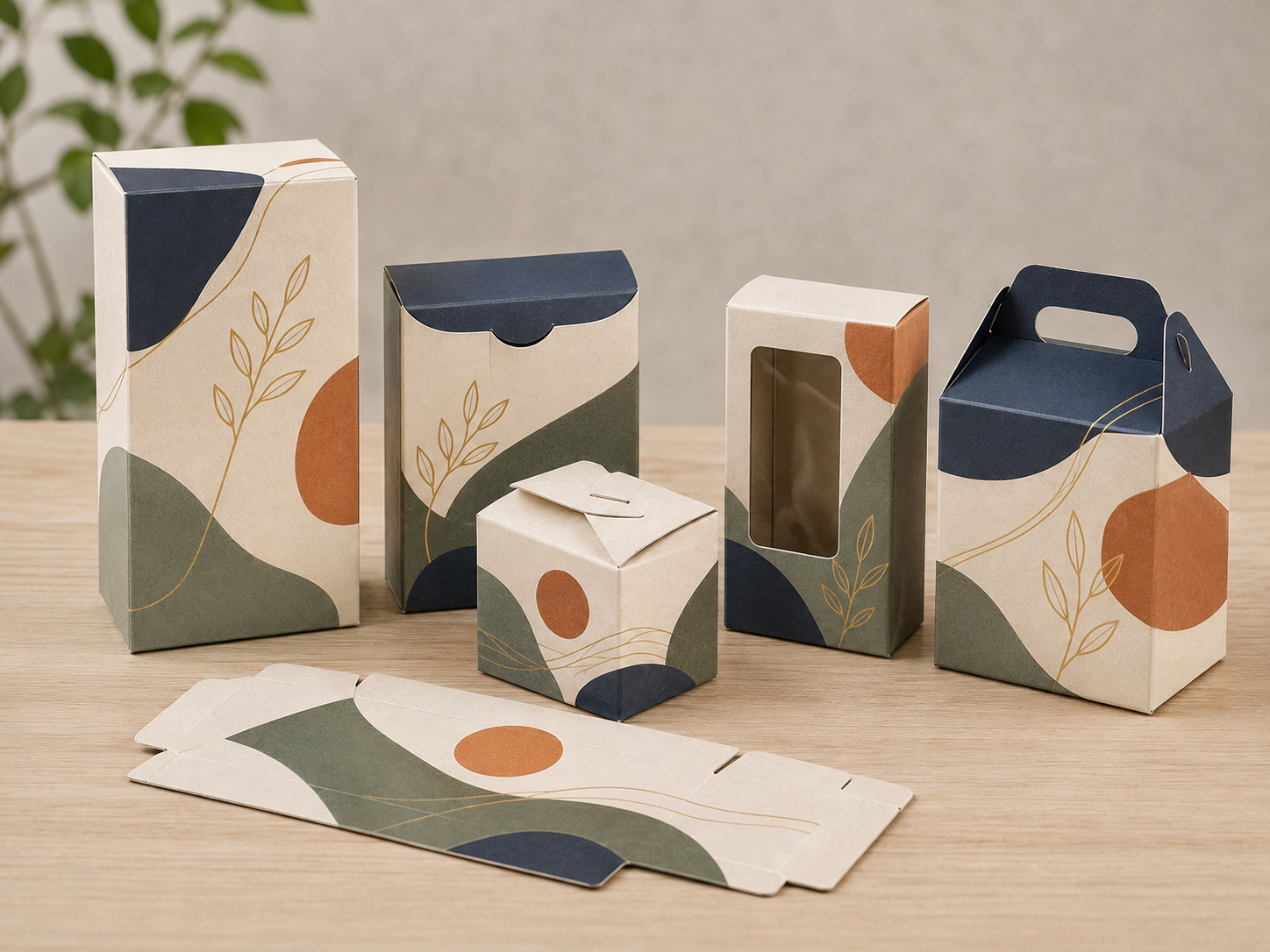
 Temporary concept image
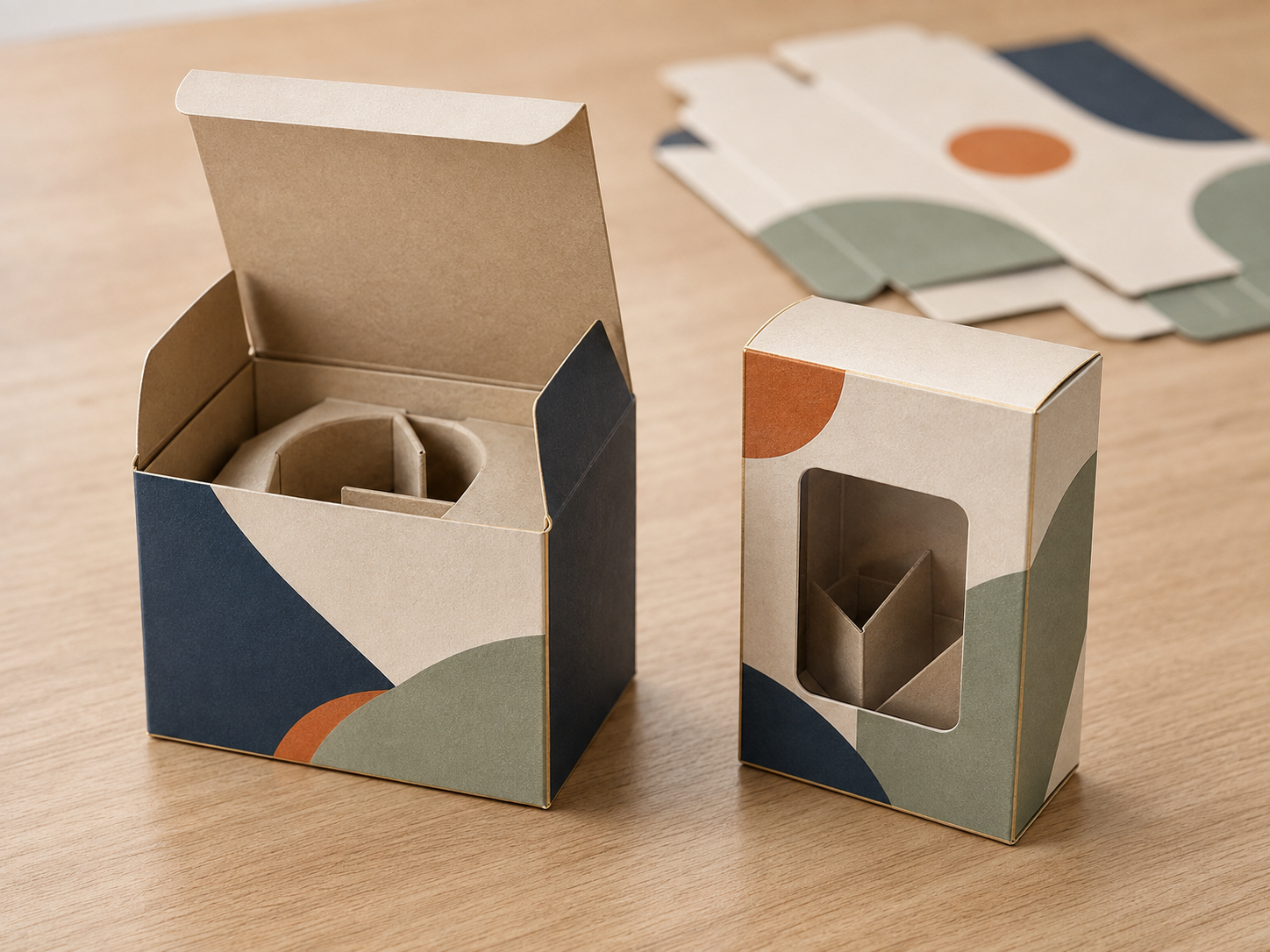
Custom printed folding cartons for food, cosmetics, retail and promotional packaging, supplied with production-ready dielines and tested closures.
Select the carton style around loading and packing speed
The opening sequence, product weight and packing method determine more than the shelf appearance. A practical structure should erect consistently, protect the product and remain efficient to pack at the intended production volume.
| Carton style | Best starting use | Approve before dieline release |
|---|---|---|
| Straight tuck end | Light retail products and clean front-panel presentation | Top and bottom orientation, dust flaps and tuck friction |
| Reverse tuck end | Efficient nesting on the printed sheet | Panel orientation, seam position and opening sequence |
| Auto-bottom | Faster manual erection or products needing a stronger base | Load, adhesive areas, flat shipping and erection motion |
| Seal-end / glued | Packing lines and products requiring controlled closure | Equipment compatibility, glue pattern and opening method |
Specify board, grain direction and scoring as one system
Board grade and caliper are selected from product weight, panel size, print method and the stiffness required in use. Grain direction and score geometry influence folding, panel flatness and the risk of cracking at printed folds.
- Confirm internal dimensions and load direction
- Review coated, kraft or micro-flute options against the product
- Check critical folds and finish combinations on a physical sample
Design for the actual packing workflow
Manual and automated packing place different demands on locks, glue seams, windows and inserts. Barcode panels, legal copy and opening instructions also need usable flat areas after the carton is assembled.
- Record whether cartons arrive flat, pre-glued or partly assembled
- Confirm window film, insert retention and food-contact boundaries where relevant
- Review master-carton count and flat-pack shipping volume
Approve the dieline through a physical prototype
A blank sample should confirm fit, assembly and closure before artwork is finalized. A printed prototype can then verify panel orientation, copy, barcode placement, colour targets and finish positions before the managed production run is released.